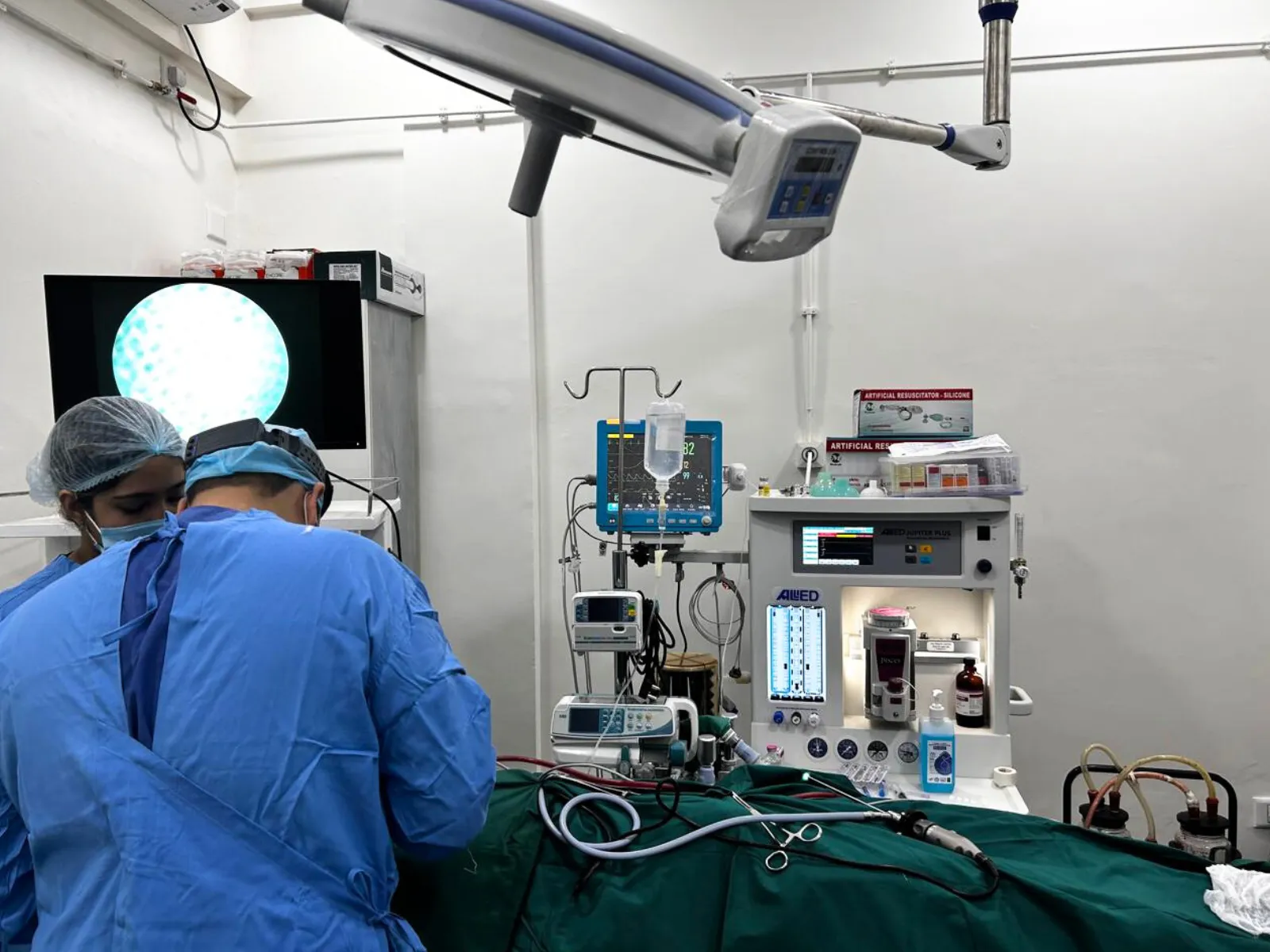
A voice that's stayed rough and scratchy for weeks. Food that seems to catch halfway down, or a cough that shows up every time you drink water. These are the complaints Dr. Bhavitha Anand hears often at Excell ENT Clinic, Frazer Town, Bengaluru, usually after they've been brushed off as "just a strain" for far too long.
The voice box does more than let you speak. It also guards the airway every single time you swallow. When either job starts slipping, it's rarely something to just wait out.
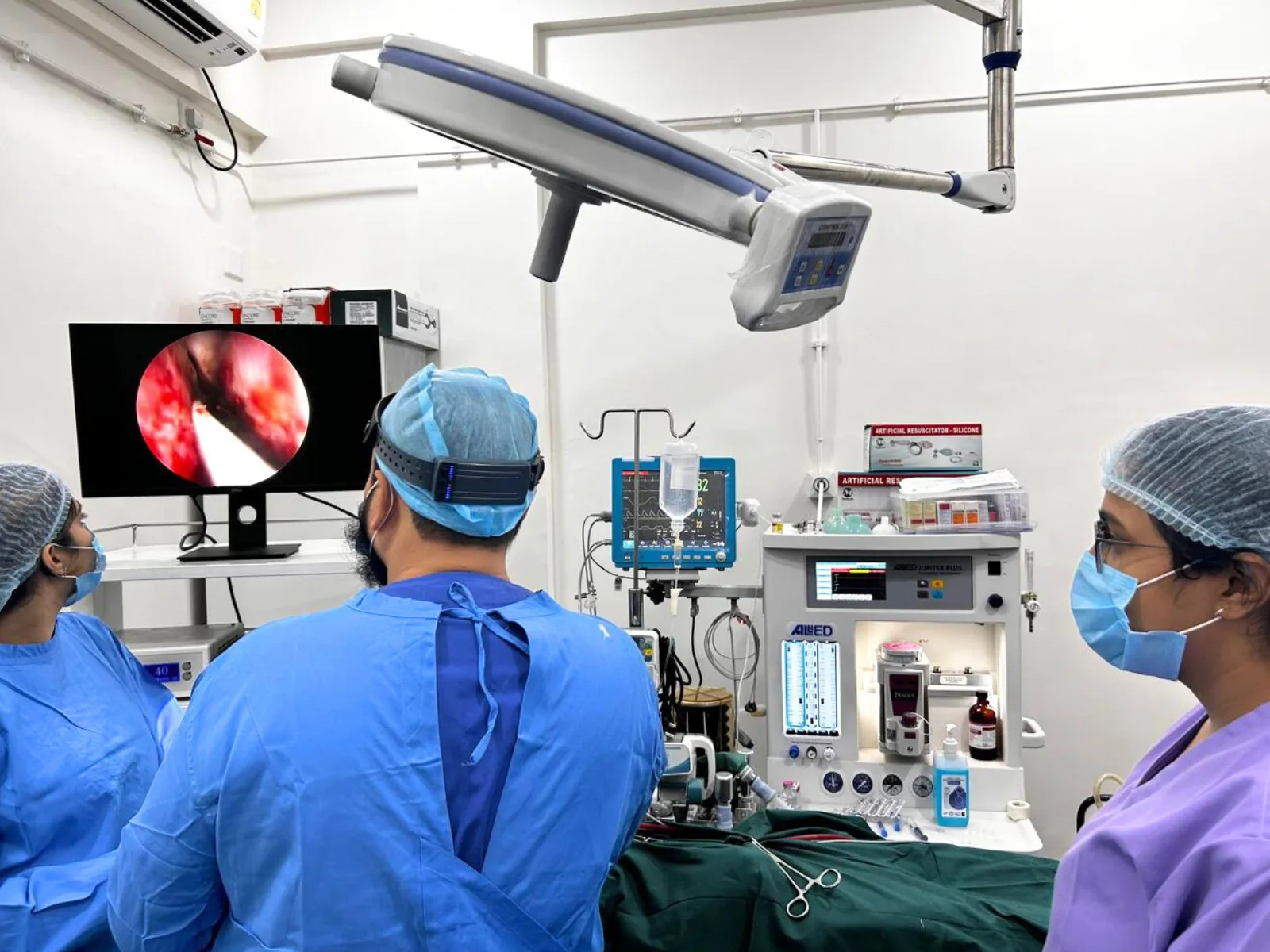
Your voice box sits at a busy junction. Two small folds of tissue inside it, the vocal cords, vibrate together to produce sound whenever air passes through them. The same structure also has to snap shut in a fraction of a second every time you swallow, so food and liquid go down the food pipe instead of the windpipe.
When the vocal cords swell, develop a small growth, or stop moving the way they should, the voice changes first, it turns rough, breathy, or tires out quickly. If the timing of that protective closure goes off instead, swallowing becomes the problem, with coughing, choking, or a sensation of food sticking.
Producing a clear voice takes precise, rapid vibration of two delicate folds of tissue, hundreds of times a second for an ordinary sentence. Swallowing is even more coordinated, over two dozen muscles firing in the right order within about a second to move food past an airway that has to close and reopen at exactly the right moment.
Either process breaks down for different reasons. Overuse, acid reflux, a viral infection, or in some cases a growth can throw off the vocal cords. Age, a prior stroke, or nerve involvement more often affects the timing of a safe swallow. Telling the two apart is the first real step.
Teachers, singers, and call-centre staff show up most often with vocal nodules or polyps, small callus-like growths that form from repeated strain on the voice. Close behind is reflux laryngitis, a rough morning voice and a constant urge to clear the throat, caused by stomach acid quietly irritating the voice box overnight.
On the swallowing side, older adults or anyone recovering from a stroke often describe coughing on water, or food that feels like it's not going down properly. Each pattern points to a different structure being the actual problem, not a single generic "throat issue."
For anyone whose voice is part of their job, a teacher, a singer, someone on the phone all day, getting a voice disorder addressed early usually means avoiding weeks of strained, unreliable speaking. Small vocal cord growths caught early often resolve with rest and therapy alone, well before surgery becomes necessary.
On the swallowing side, the stakes are higher than comfort. Unmanaged swallowing difficulty raises the real risk of food or liquid entering the airway, which can lead to repeated chest infections. Addressing it properly protects against that, not just the inconvenience of coughing at meals.
Anyone whose voice has stayed hoarse, rough, or tired-sounding for more than two or three weeks fits here, especially voice professionals who can't afford to just wait it out. So does anyone with a chronic morning throat-clear or a raspy voice that seems tied to reflux.
On the swallowing side, this is for anyone coughing or choking on food or liquids, feeling like something is sticking on the way down, or noticing unexplained weight loss because eating has quietly become harder than it used to be.
brings over 11 years of clinical experience across ESIC Hospital, Manipal Hospitals, and East Point Medical College, with particular expertise in microlaryngoscopy and voice disorder management alongside her broader ENT surgical practice.
For patients who need structured rehabilitation once the underlying issue is treated, she works alongside Excell ENT's audiology and speech-language therapy team, led by senior audiologist and speech pathologist Mr. AK Patel, who brings over 25 years of experience guiding patients through voice and swallowing recovery.
A straightforward in-office scope examination of the vocal cords sits at one end of the range. Microlaryngoscopy surgery for a vocal cord growth, paired with a structured course of voice therapy, sits at the other. Swallowing rehabilitation is costed separately based on how many sessions are actually needed.
Dr. Bhavitha shares real numbers only after she's actually seen the vocal cords or assessed the swallow, not as a guess made before you've walked in.
Vocal nodules from overuse often start improving within a few weeks of voice rest combined with therapy. Reflux-related hoarseness typically needs six to eight weeks of consistent medical management before the voice clears up fully. Surgical cases need a short, structured period of voice rest immediately after the procedure.
Swallowing rehabilitation runs on its own timeline, usually measured in weeks of guided exercises rather than a single visit fix.
A diagnostic scope exam is quick and low-risk, with mild gagging being the most anyone typically feels. Microlaryngoscopy is a well-established day-care surgical procedure performed under general anaesthesia, with a short, predictable recovery built around a period of voice rest.
Voice and swallowing therapy carry no real side effects beyond the effort of showing up consistently, since results depend on practising the exercises as guided.
Excell ENT Clinic runs a dedicated Voice & Swallowing Centre in Frazer Town, Bengaluru, where Dr. Bhavitha Anand's surgical expertise is backed by an in-house audiology and speech-language therapy team led by Mr. AK Patel. That combination means the medical, surgical, and rehabilitation sides of care all happen under one roof.
Every case is assessed on its actual pattern, overuse, reflux, a structural growth, or a swallowing coordination issue, because the right treatment depends entirely on which one is actually driving the symptoms.
A sore throat from a cold is usually painful, comes with other cold symptoms, and clears up within a week on its own. A hoarse or changed voice without much pain, especially one that sticks around past two or three weeks, is a different problem entirely, one that points to the vocal cords themselves rather than a passing infection.
Treating persistent hoarseness with throat lozenges and rest alone rarely fixes what's actually going on. If the voice hasn't cleared up in the time a normal cold would take, it's worth an actual look rather than more waiting.
A voice change lasting more than two to three weeks, frequent coughing or choking on food or drink, a sensation of food sticking on the way down, or unexplained weight loss tied to eating difficulty, all of these are reasons to get evaluated rather than keep adjusting around the problem.
This applies even more to anyone whose livelihood depends on their voice, since waiting too long can turn a manageable strain into something that needs surgery to fix.
A rough voice or a slightly awkward swallow gets dismissed far too often as something minor. At Excell ENT Clinic, the starting point is always the same, find out exactly what the vocal cords or the swallow mechanism are actually doing before deciding on treatment.
If you've been searching for real voice or swallowing disorder treatment in Bangalore instead of another round of lozenges, a proper evaluation with Dr. Bhavitha Anand is the most direct way to get an actual answer.