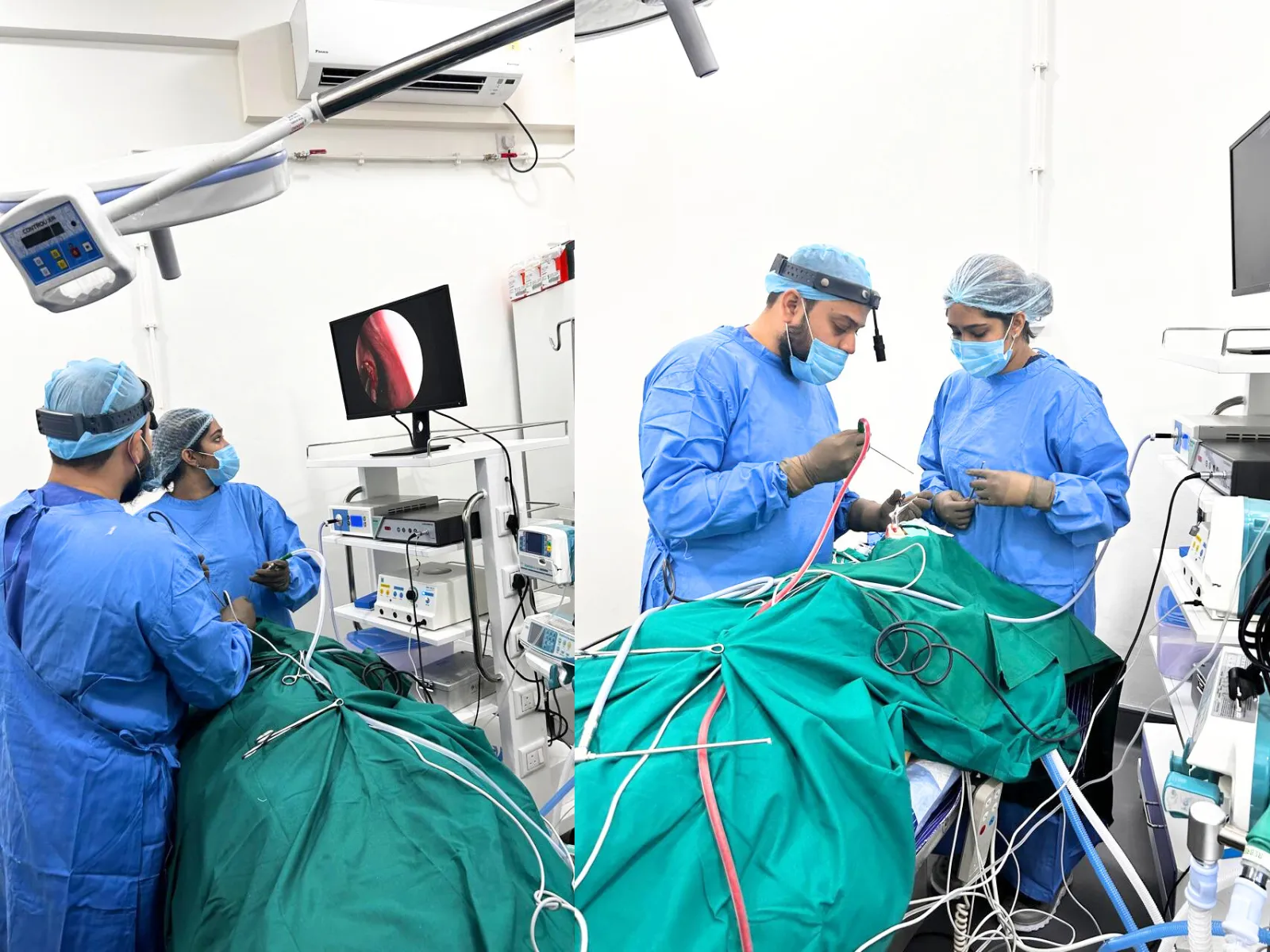
A growth flagged on a scan near the base of the skull tends to trigger one word in most people's minds: "brain surgery." At Excell ENT Clinic, Frazer Town, Bengaluru, Dr. Saud Ahmed manages a large share of these cases endoscopically, through the nostril, without ever opening the skull.
This is a narrow, specialised field sitting right at the crossroads of ENT, the eyes, and neurosurgery. It takes fellowship-level training to manage well, not a general surgical opinion.
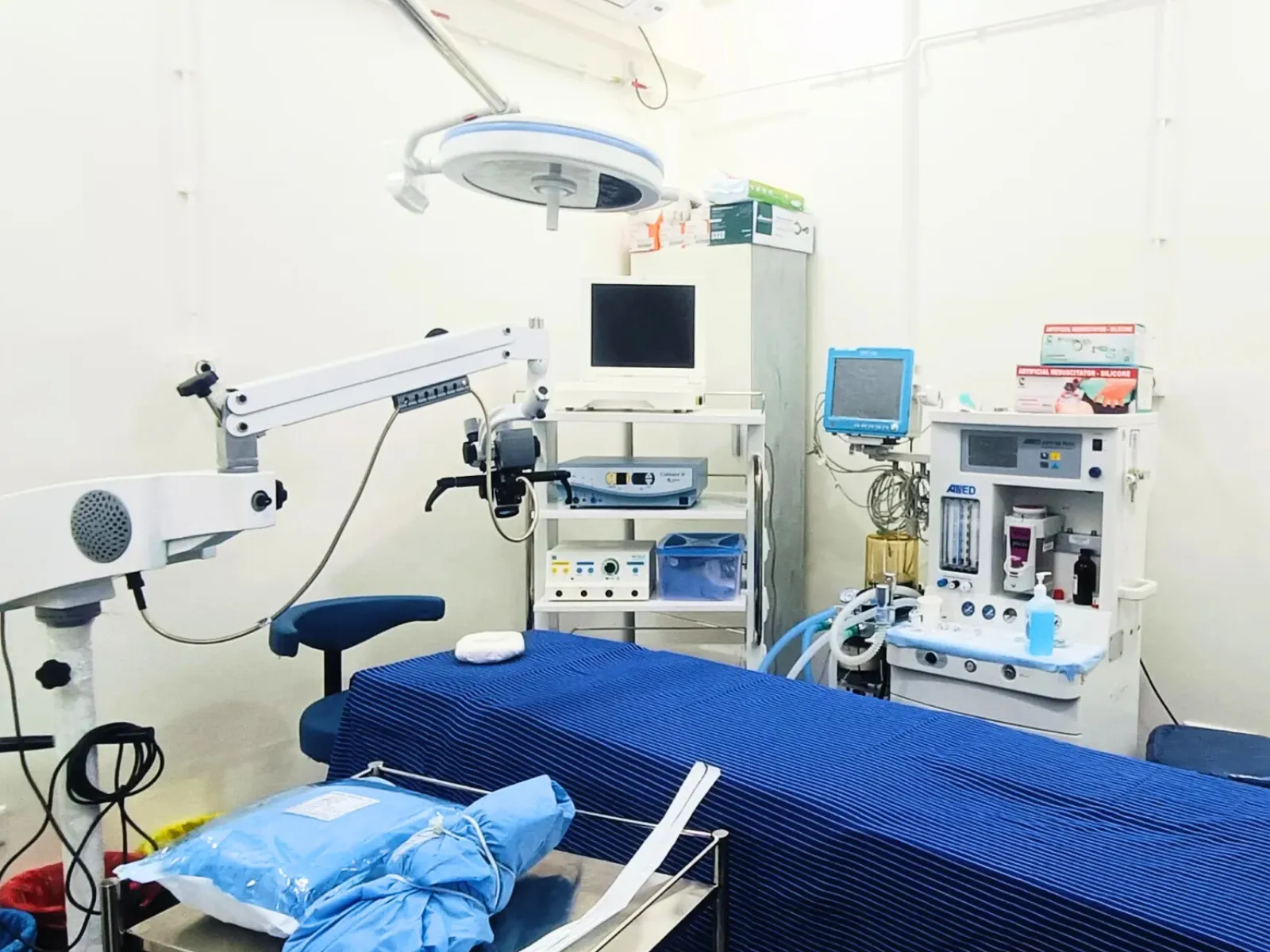
The skull base is the bony floor separating your nasal cavity and sinuses from the brain sitting directly above it. It's a narrow, crowded space carrying major nerves and blood vessels through it, which is exactly why pathology here needs a different level of precision than a routine sinus problem.
"Skull base pathology" is an umbrella term. It covers pituitary tumors, benign lesions, cancers that have extended upward from the sinuses, and CSF leaks, where the fluid cushioning the brain escapes through a weak point in that bony floor.
Rather than opening the skull from outside, a long thin endoscope and matching instruments are passed through the nostril itself, using the nose's own natural corridor to reach the base of the skull from below. The camera gives a magnified, well-lit view of a space that would otherwise be very difficult to access.
For lesions positioned close to critical structures, Dr. Saud Ahmed plans the case jointly with a neurosurgery team, so the approach is matched exactly to where the pathology actually sits rather than defaulting to the most invasive option available.
Pituitary tumors are among the more frequent referrals, often picked up because of hormone imbalance symptoms or a change in vision, and confirmed on an MRI ordered elsewhere. CSF leaks show up differently, usually as a persistent, clear, watery drip from one side of the nose that's been mistaken for allergies for months.
Then there are lesions found incidentally, a scan done for an unrelated headache turns up a mass near the skull base, and the patient arrives here for a second opinion on whether it actually needs treatment.
Where an endoscopic approach is possible, patients avoid external incisions entirely, along with the longer recovery that comes with traditional open skull base surgery. Recovery is measured in days to a couple of weeks rather than months.
Getting a fellowship-trained opinion early also means a lesion gets accurately mapped and, in many cases, correctly identified as manageable, rather than a patient carrying the anxiety of an unclear "mass near the brain" finding for longer than necessary.
Anyone told they have a growth or lesion at or near the base of the skull, whether found on a scan done for headaches, vision changes, or hormone symptoms, is a reasonable candidate for a specialist opinion here. So is anyone with persistent, one-sided, clear watery nasal drainage that hasn't responded to allergy treatment.
This also applies to patients with a head and neck cancer that scans show extending toward the skull base, where the surgical plan needs to account for that boundary specifically.
is the Managing Director & CEO of Excell ENT Clinic and holds fellowships in Skull Base Surgery, Allergy & Immunotherapy (RGUHS), and Sleep Surgery (Singapore). His post-graduate training was completed at Christian Medical College, Vellore, one of India's most respected medical institutions.
Alongside his practice at Excell ENT, he is a consultant with Manipal Hospital, Millers Road, and heads the ENT department at HBS Charitable Hospital, Bangalore, giving him regular exposure to complex, multidisciplinary skull base cases across more than one institution.
Cost here depends heavily on the size and exact location of the lesion, the surgical approach required, and whether a neurosurgery team needs to be involved alongside Dr. Saud Ahmed. There is no single number that applies across every skull base case.
A realistic estimate is only possible once your scans have actually been reviewed, not before.
Endoscopic skull base procedures typically allow patients to be up and about within days, with full recovery often falling within a couple of weeks. Cases requiring a combined approach with neurosurgery run on a longer, more individualised timeline.
Dr. Saud Ahmed lays out a realistic recovery plan once imaging and, where needed, hormone or vision assessments are complete.
Every skull base case is planned with detailed imaging first, so the surgical team knows exactly where major nerves and blood vessels sit before starting. Endoscopic approaches carry a well-established safety profile for suitable cases, with risks discussed specifically against the lesion's own location.
Where a case is too close to a critical structure for a purely endoscopic approach, that's identified during planning, not discovered mid-procedure.
Skull base surgery isn't a routine add-on to general ENT practice, it's a distinct fellowship. Dr. Saud Ahmed trained specifically in this field and continues to manage complex cases across Excell ENT Clinic, Manipal Hospital Millers Road, and HBS Charitable Hospital, where he heads the ENT department.
That breadth of exposure across institutions is what allows a case to be matched to the right approach, endoscopic where possible, jointly managed with neurosurgery where necessary.
Routine sinus surgery treats infection, polyps, or blockage confined within the sinuses themselves, a common, well-understood procedure. Skull base surgery is a different undertaking entirely, it addresses pathology right at the boundary where the sinuses meet the brain cavity, next to nerves controlling vision and other critical functions.
The instruments may look similar from the outside, but the planning, imaging, and margin for error are not remotely the same.
A scan that has flagged a growth near the skull base, persistent one-sided watery nasal discharge, or new vision or hormone-related symptoms are all reasons to get a specialist opinion rather than sit with an unclear report.
If you've been told a lesion needs "brain surgery" without a clear explanation of why an endoscopic approach isn't an option, a second opinion from a fellowship-trained skull base surgeon is a reasonable next step.
A finding near the skull base is unsettling news to sit with, and it deserves a specific, fellowship-level opinion rather than a generic surgical consult. At Excell ENT Clinic, the starting point is always the same, map out exactly what the pathology is and where it sits before deciding how to treat it.
If you've been searching for real skull base surgery expertise in Bangalore, a proper evaluation with Dr. Saud Ahmed is the most direct way to get an actual answer.