One second you're fine, the next the room's tilting and you're gripping the nearest wall. It passes in half a minute, then comes back the moment you roll over in bed. That specific story is one our specialists hear almost every week at Excell ENT Clinic, Frazer Town, Bengaluru.
Most people default to calling it "dizziness" and leave it there. But dizziness and true vertigo aren't the same complaint, and treating them the same way rarely fixes anything.

Deep inside your inner ear sits a small, fluid-filled structure that quietly tells your brain which way is up. Disturb it, through a viral infection, tiny displaced crystals, or a change in inner ear fluid pressure, and it starts sending signals that contradict what your eyes are seeing.
Your brain doesn't know what to trust, and the result is that spinning, tilting sensation people describe as the floor moving under them. It's not in your head. It's a real, measurable mismatch between two systems that are supposed to agree with each other.
Balance isn't run by one organ working alone. It's your inner ear, your eyes, and receptors in your joints and muscles all reporting to the brain at once, constantly, without you noticing. Vertigo shows up the moment one of those channels sends bad information.
The most common culprit by far is tiny calcium crystals inside the inner ear's balance canals shifting out of place. Roll over, tip your head back to reach a shelf, and suddenly the canal fluid moves in a way it shouldn't. That's the trigger behind the majority of positional vertigo our specialists see walk through the door.
BPPV, short bursts of spinning triggered by rolling over or looking up, is the one that walks in most often, and it's usually the most straightforward to resolve. Others arrive with something longer and heavier, hours of spinning paired with ringing in one ear and a sense of fullness, which points toward Meniere's disease instead.
Then there's the aftermath of a viral inner ear infection, vertigo that hits hard and sudden, sticks around for days, and leaves people unsteady on their feet long after the spinning itself has settled. Each pattern needs its own read, not a blanket "it's just vertigo" response.
People who go through a proper repositioning maneuver for BPPV often describe it the same way, relief inside minutes, sometimes in that very first sitting. No more flinching before turning over in bed or bending down to pick something off the floor.
For the longer-running conditions, structured vestibular rehabilitation retrains the brain to compensate for whatever the inner ear can no longer do reliably. Confidence in walking, driving, even climbing stairs, tends to return well before every last symptom is gone.
If turning over in bed, looking up at a top shelf, or bending down to tie your shoes sets off a spinning episode, that pattern alone is worth a proper look. Older adults who've started avoiding stairs or holding onto furniture out of caution fall into this group too, often without ever calling it "vertigo" out loud.
Anyone with vertigo that returns in clusters, or that shows up alongside hearing changes or ear fullness, is a reasonable candidate for a full vestibular assessment rather than another wait-and-see week at home.
A single repositioning maneuver for a clear-cut BPPV case sits at one end of the range. A full VNG assessment followed by a structured vestibular rehabilitation program sits at the other. There isn't one flat number that applies to every spinning complaint.
Our specialists share the actual cost only after they've assessed how you move and what's driving the imbalance, not as a guess made over the phone before you've even walked in.
Classic BPPV often responds within one to two repositioning sessions, sometimes the spinning stops before you've even left the clinic. Vestibular neuritis and Meniere's disease run on a longer clock, typically a few weeks of guided rehabilitation before the brain fully compensates.
Our specialists lay out a realistic timeline at the first visit based on what the assessment actually shows, not a one-size-fits-all promise.
Repositioning maneuvers are low-risk and drug-free. A short wave of queasiness during the movement itself is the most common complaint, and it usually passes within minutes of finishing.
Vestibular rehabilitation exercises can feel a little uncomfortable at first too, that's expected, it's the brain relearning balance signals it had started to ignore. Every exercise is paced to what a patient can actually tolerate, not pushed past it.
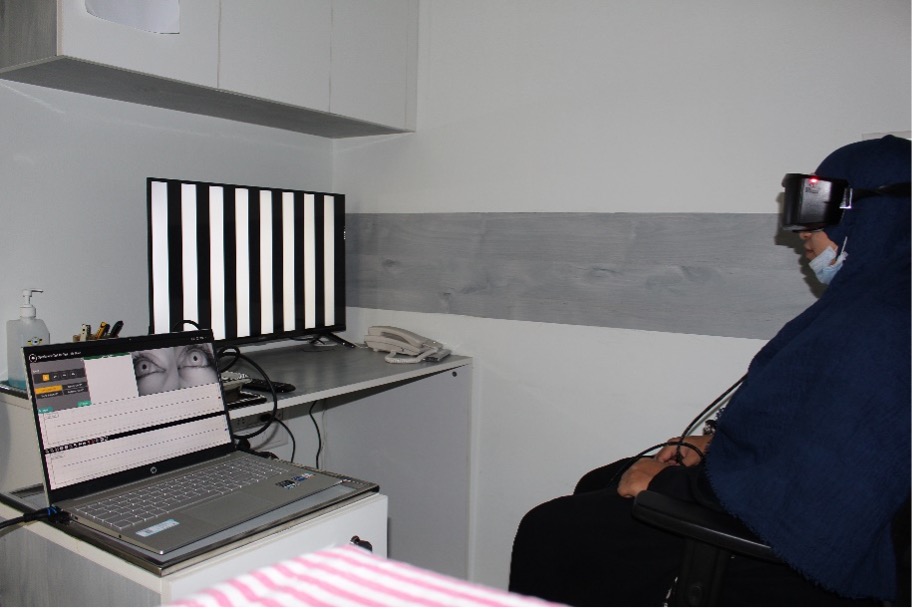
Excell ENT Clinic runs a dedicated Vertigo & Balance Centre in Frazer Town, Bengaluru, built around actual vestibular testing instead of a quick glance and a motion-sickness tablet. Specialized vestibular training is what separates a real diagnosis from a guess.
Every case gets assessed on its own pattern, position-triggered, hearing-linked, or infection-related, because the right treatment depends entirely on which one you're actually dealing with.
Standing up too fast and feeling briefly woozy is common, usually harmless, and tied to blood pressure, not the inner ear. True vertigo feels different, an actual spinning or tilting sensation, often triggered by a specific head movement, and it tends to repeat in a recognisable pattern.
Treating the two the same way rarely works. Lightheadedness from dehydration doesn't need a repositioning maneuver, and true positional vertigo won't improve from just drinking more water. Getting the label right is most of the battle.
Spinning episodes that keep coming back, imbalance that's changed how confidently you move around your own home, or vertigo paired with hearing loss or ear ringing, all of these are worth an actual evaluation rather than another week of avoiding certain head positions.
If a wave of true spinning ever arrives with slurred speech, facial weakness, or double vision, that's an emergency, not an appointment to book for next week.
Vertigo gets waved off far too often as something to just sleep off or push through. At Excell ENT Clinic, the starting point is always the same, find out exactly which part of the balance system is misfiring before deciding how to treat it.
If you've been searching for real vertigo treatment in Bangalore instead of another motion-sickness tablet, a proper vestibular assessment at Excell ENT Clinic is the most direct way to get an actual answer.